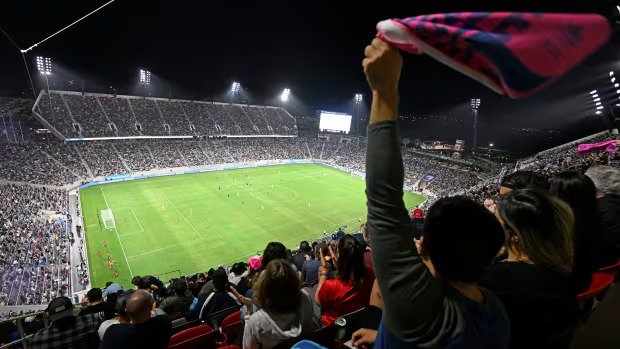
NWSL Breaks Attendance Records: Is Women’s Soccer Bigger Than Ever in 2024?
The National Women’s Soccer League (NWSL) is shattering expectations in 2024 NWSL Breaks Attendance Records, with historic attendance…

The Business of Soccer, The global soccer industry has transformed into a $50 billion economic powerhouse, with elite clubs operating as multinational entertainment conglomerates. As we enter 2024, revolutionary new revenue streams and financial models are reshaping how clubs sustain success both on and off the pitch.
In this comprehensive guide to soccer economics, we analyze:
✔ Breakdown of revenue sources for top clubs
✔ Emerging financial trends changing the game
✔ How smaller clubs compete financially
✔ The dark side of football finances
✔ Future money-making innovations
Whether you’re a business student, football executive, or curious fan, this deep dive reveals the complex financial engine powering the world’s most popular sport.
Premier League: $12B domestic deal (2025-28)
UEFA: $4B annual Champions League media rights
Emerging Markets: India’s $300M streaming deal
Front-of-shirt: Man United’s $80M/year TeamViewer deal
Training Kit: Chelsea’s $20M/year deal
Sleeve Sponsors: Liverpool’s $15M/year Expedia
Ticket Sales: Arsenal’s $120M annual gate receipts
Corporate Hospitality: Real Madrid’s $5000+/seat packages
Stadium Tours: Barcelona’s $50M/year museum income
Transfer Profits: Benfica’s $400M sales since 2020
Loan Fees: Chelsea’s $20M loan army income
Sell-on Clauses: Dortmund’s 20% Haaland profit
Financial Data: Deloitte Football Money League
City Football Group: 13 clubs worldwide
Red Bull: 5 clubs with unified scouting
Pros: Shared resources, global talent pipelines
Cons: Competitive integrity concerns
NFT Collectibles: PSG’s $50M in NFT sales
Tokenized Investments: Socios fan tokens
Virtual Stadiums: Man City’s metaverse plans
Barcelona Femení: $12M annual revenue
NWSL Expansion: $50M franchise fees
Sponsor Shift: Separate women’s team deals
For more financial analysis, visit SoccerNewsZ.com
Brighton: Data-driven recruitment
Brentford: B-team profit model
RB Leipzig: Youth development focus
| Club | Innovation | Annual Income |
|---|---|---|
| Ajax | Academy sales | $200M+ |
| Porto | South American pipeline | $150M |
| Celtic | Asian market focus | $30M merch |
Sponsorship inflation (Newcastle’s Saudi deals)
Asset amortization tricks (Chelsea’s 8-year contracts)
Related-party transactions
Barcelona’s $1.5B restructuring
Everton’s stadium financing crisis
Italian clubs’ tax debt issues
Governance Source: UEFA Financial Reports
| League | Avg. Salary | Top Earner |
|---|---|---|
| Premier League | $4.2M | Haaland ($45M) |
| La Liga | $3.1M | Lewandowski ($35M) |
| Bundesliga | $2.8M | Kane ($30M) |
| Serie A | $2.3M | Vlahović ($15M) |
| Ligue 1 | $1.9M | Mbappé ($110M) |
Algorithm-driven seat costs
30% revenue boost in tests
Pay-per-angle streaming
In-game betting integration
Mixed-use real estate
Year-round entertainment hubs
Real-time digital ad swaps The Business of Soccer
Performance-based pricing
70% wage-to-revenue cap
Tighter related-party rules
Mandatory debt disclosures
Commercial department expansions
Player contract restructuring
Academy investment focus
Real Madrid ($6B valuation)
Manchester United ($5.8B)
Barcelona ($5.5B)
Liverpool ($5.1B)
Bayern Munich ($4.8B)
Key Growth Area: Social media following = sponsorship premiums
Understanding The Business of Soccer club finances explains transfer decisions, managerial changes, and competitive cycles. As the sport evolves into a full entertainment business, financial literacy becomes essential for every serious fan.
Which club’s business model impresses you most? Debate below! ⚽

The National Women’s Soccer League (NWSL) is shattering expectations in 2024 NWSL Breaks Attendance Records, with historic attendance…
The 2024 summer Soccer Transfer News Today window is delivering blockbuster moves, shock rumors, and record-breaking deals that…
Introduction: The Data Revolution in Soccer The Rise of Soccer Analytics, Soccer has entered its Moneyball era. In…

Leave a Reply