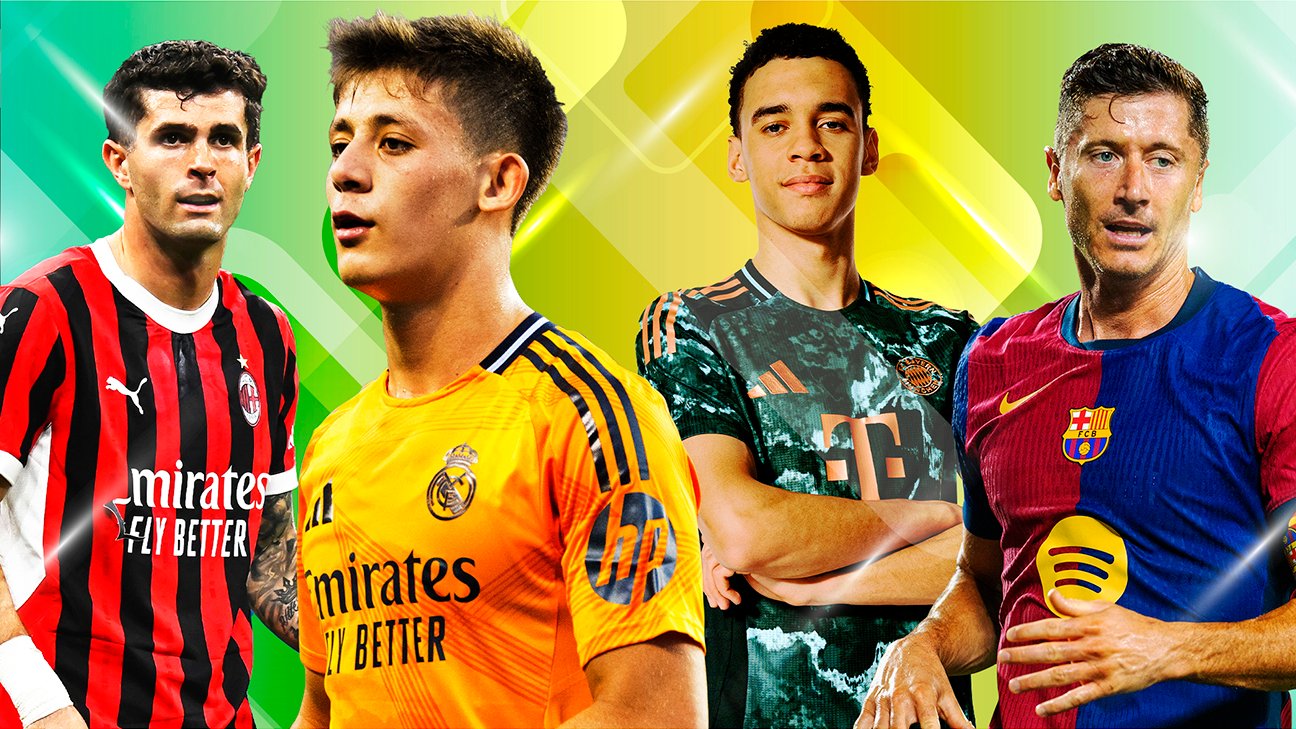
Soccer Jersey Deals 2024: Where to Buy Authentic Kits at Discounted Prices
The global Soccer Jersey Deals 2024 market is projected to reach $6.8 billion in 2024, with fans eager…
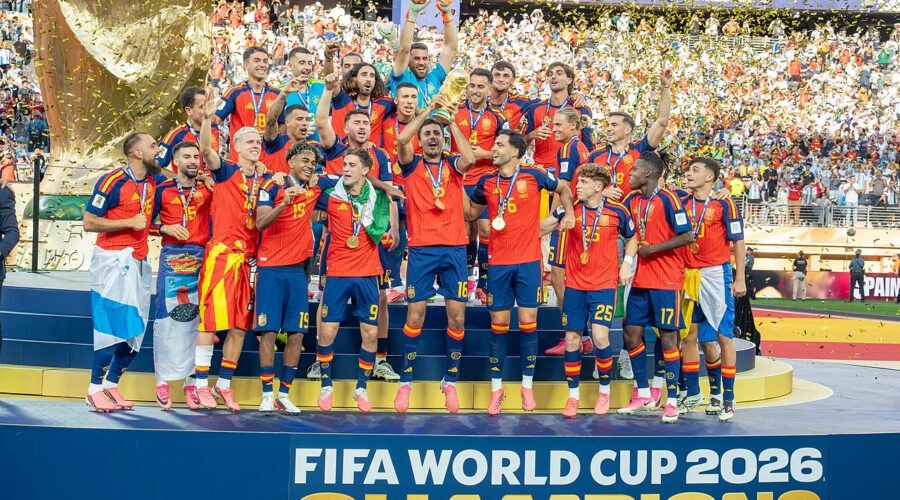
FIFA World Cup 2026 Champions, The FIFA World Cup final delivered everything football fans could have hoped for—drama, tension, world-class goalkeeping, tactical battles, and a moment of brilliance that decided the biggest match in world football. After more than 100 minutes of relentless action, Spain emerged as the new FIFA World Cup 2026 champions, defeating defending champions Argentina 1-0 thanks to an unforgettable extra-time strike from substitute Ferran Torres.
Meanwhile, Spain celebrated their second FIFA World Cup title, adding another glorious chapter to the nation’s football history after their unforgettable triumph in South Africa in 2010.
Spain entered the final carrying tremendous momentum. Having already established themselves as European champions, Luis de la Fuente’s side showcased throughout the tournament why they were among the world’s most complete teams.
Their philosophy remained simple yet incredibly effective—patient possession, intelligent movement, relentless pressing, and exceptional technical quality across every position.
Against Argentina, Spain dominated possession almost from the opening whistle. While they created numerous opportunities, Argentina’s disciplined defense and the remarkable performance of goalkeeper Emiliano Martínez kept the score level for more than 100 minutes.
When the breakthrough finally arrived, it was a fitting reward for Spain’s persistence.
Every World Cup final creates a hero.
In 2026, that player was Ferran Torres.
Introduced from the bench to inject fresh energy into Spain’s attack, Torres made the decisive impact when his country needed him most.
In the 106th minute, Spain finally broke through Argentina’s resilient defensive wall. After sustained pressure inside the penalty area, the ball fell kindly to Torres, who reacted instantly with a powerful close-range finish beyond Emiliano Martínez.
The stadium erupted.
Spanish players rushed toward the scorer while thousands of supporters celebrated a goal that would ultimately secure football’s greatest prize.
For Torres, it became the defining moment of his international career.
FIFA World Cup 2026 Champions, Although the final score suggests a narrow defeat, Argentina deserve enormous credit for their defensive commitment.
After Enzo Fernández received his second yellow card during the second half, Argentina were forced to play with ten men for the remainder of regulation time and throughout extra time.
Despite the numerical disadvantage, Lionel Scaloni’s team refused to surrender.
Every player defended with incredible determination, blocking shots, closing passing lanes, and frustrating Spain’s attack for extended periods.
Remarkably, Argentina failed to register a single shot during the 90 minutes of normal time, illustrating just how dominant Spain had been throughout the contest.
Yet the reigning champions continued fighting until the very end.
If Argentina managed to survive for over 100 minutes, much of the credit belongs to goalkeeper Emiliano Martínez.
Time after time, the Argentine shot-stopper denied Spain with outstanding saves.
Whether facing close-range finishes, long-range efforts, or dangerous crosses into the penalty area, Martínez remained calm and composed.
His positioning, reflexes, and leadership frustrated Spain’s attackers throughout the evening.
Although Ferran Torres eventually found a way past him, Martínez’s performance ensured Argentina remained competitive far longer than many expected after going down to ten players.
His display once again reinforced his reputation as one of world football’s elite goalkeepers.
FIFA World Cup 2026 Champions, Every football fan understood the significance of this final for Lionel Messi.
At 39 years old, the Argentine captain had an opportunity to secure consecutive FIFA World Cup titles and perhaps complete the perfect ending to an extraordinary international journey.
Instead, Spain’s disciplined defensive organization prevented Messi from producing his usual magic.
Although he continued searching for moments of brilliance, Spain limited his influence throughout the match.
Adding further disappointment, Messi was unable to score, meaning he fell short of overtaking Kylian Mbappé in the tournament’s Golden Boot race.
Even in defeat, however, Messi demonstrated the leadership and determination that have defined his legendary career.
He encouraged teammates until the final whistle and accepted the loss with remarkable dignity.
Luis de la Fuente deserves immense praise for Spain’s tactical approach.
His side dominated virtually every statistical category:
Instead of abandoning their style after missed opportunities, Spain remained patient.
They trusted their system.
Eventually, their persistence paid off.
This victory highlighted how modern football increasingly rewards tactical discipline alongside technical excellence.
FIFA World Cup 2026 Champions, Following Spain’s historic victory, head coach Luis de la Fuente struggled to hide his emotions.
He described enormous pride in watching this generation of Spanish footballers grow together while remaining committed to their footballing philosophy.
According to the Spanish manager, the squad represents far more than talented individuals—they are a united family built around teamwork, discipline, and mutual trust.
He praised the players for believing in their collective identity throughout the tournament, emphasizing that every sacrifice made during their journey had been worthwhile.
De la Fuente also acknowledged that while Spain would have preferred to settle the match earlier, World Cup finals rarely follow simple scripts.
Instead, his team embraced the challenge, remained patient under pressure, and ultimately earned their reward.
Although devastated by defeat, Argentina manager Lionel Scaloni chose reflection over frustration.
He expressed immense gratitude toward his players, praising their commitment and willingness to compete despite overwhelming challenges.
Scaloni reminded supporters that reaching consecutive World Cup finals is an extraordinary achievement requiring consistency, sacrifice, and exceptional quality.
He emphasized that true champions are judged not only by how they celebrate victories but also by how they respond to painful defeats.
According to Scaloni, Argentina left everything on the pitch and had every reason to remain proud despite falling just short of retaining their world title.
His words reflected the character that has defined Argentina throughout recent years.
FIFA World Cup 2026 Champions, One of the game’s defining moments arrived during the second half when midfielder Enzo Fernández received his second yellow card.
Reduced to ten players, Argentina faced an almost impossible challenge against one of the tournament’s strongest possession-based teams.
Spain immediately increased their attacking intensity.
Wave after wave of Spanish attacks forced Argentina deeper into their own half.
Even with the numerical disadvantage, Argentina defended courageously, delaying Spain’s breakthrough until extra time.
Ultimately, however, playing with ten men for such a long period proved too demanding against an opponent with Spain’s depth and technical quality.
Unlike many high-scoring knockout matches during the tournament, the FIFA World Cup 2026 final became a tactical chess match.
Spain preferred methodical possession.
Argentina prioritized defensive organization.
As extra time progressed, many supporters expected penalties to decide the championship.
Instead, Ferran Torres produced one decisive moment that ensured the trophy would be lifted by Spain before a penalty shootout became necessary.
Spain first conquered world football in 2010 after defeating the Netherlands in Johannesburg.
Sixteen years later, they have reclaimed football’s biggest prize.
The triumph represents the success of a new generation inspired by the achievements of legendary Spanish players from the previous golden era.
Rather than relying on nostalgia, this squad forged its own identity through modern tactics, squad depth, and remarkable consistency.
Winning both the UEFA European Championship and the FIFA World Cup within a short period firmly establishes Spain as the dominant force in international football.
FIFA World Cup 2026 Champions, Although Argentina failed to defend their world title, their tournament should not be remembered solely for the final result.
They displayed resilience throughout the competition, overcoming difficult opponents and once again reaching the biggest stage in international football.
The final itself demonstrated remarkable courage.
Playing with ten men, facing constant Spanish pressure, and still forcing the match into extra time showcased the determination that has become synonymous with Lionel Scaloni’s team.
For supporters, disappointment is inevitable.
Yet Argentina’s achievements over recent years—including winning the Copa América and the FIFA World Cup before reaching another World Cup final—remain among the finest eras in the nation’s football history.
Spain’s triumph reflects a broader evolution in international football.
Success is increasingly built on tactical flexibility, collective discipline, squad depth, and intelligent coaching rather than relying on individual brilliance alone.
The 2026 champions combined experienced leaders with fearless young talent, creating one of the tournament’s most balanced squads.
Meanwhile, Argentina demonstrated that resilience, leadership, and defensive organization remain essential ingredients for success at the highest level.
This final also symbolized the passing of generations, with Spain’s emerging stars lifting the trophy while Lionel Messi’s remarkable World Cup journey reached its emotional conclusion.
The FIFA World Cup 2026 final will be remembered as one of patience, resilience, and persistence rather than an avalanche of goals.
Spain controlled the contest from start to finish but needed extra time to finally unlock Argentina’s determined defense.
Ferran Torres etched his name into Spanish football folklore with the winning goal, while Emiliano Martínez produced one of the finest goalkeeping performances ever seen in a World Cup final despite finishing on the losing side.
For Lionel Messi, the night ended in disappointment, but his legacy as one of football’s greatest players remains untouchable.
For Spain, however, it was a night of celebration—a moment that confirmed the arrival of another golden generation ready to dominate international football.
FIFA World Cup 2026 Champions, Spain’s 1-0 extra-time victory over Argentina in the FIFA World Cup 2026 final was a fitting showcase of elite international football. It featured tactical intelligence, defensive resilience, world-class goalkeeping, and one decisive moment that changed history. Ferran Torres’ extra-time winner secured Spain’s second FIFA World Cup title, while Luis de la Fuente’s talented squad cemented their place among the greatest teams of the modern era.
Although Argentina’s dream of defending their crown came to an end, their courageous performance—especially after being reduced to ten men—earned admiration across the football world. Lionel Messi’s World Cup journey may have concluded without another trophy, but his contribution to the sport remains legendary. Meanwhile, Spain celebrated a new golden chapter, proving once again that teamwork, patience, and belief can lead to football’s ultimate prize.

The global Soccer Jersey Deals 2024 market is projected to reach $6.8 billion in 2024, with fans eager…
Introduction: The New Economics of Football The Changing Business of Soccer, The global soccer industry is undergoing its…
Introduction: Football’s Golden Age of Storytelling The world of soccer documentaries has exploded in quality and quantity, with…


Leave a Reply