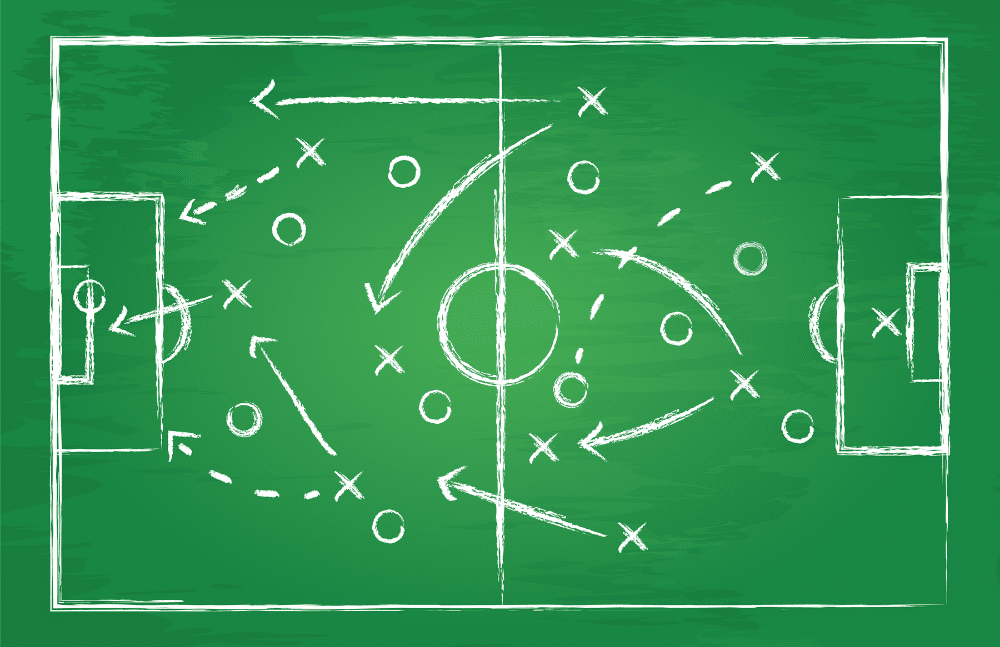
The Future of Soccer Tactics in 2024: How Innovation is Changing the Beautiful Game
Soccer tactics are undergoing their most radical transformation since the invention of Total Football, with 2024 seeing revolutionary…
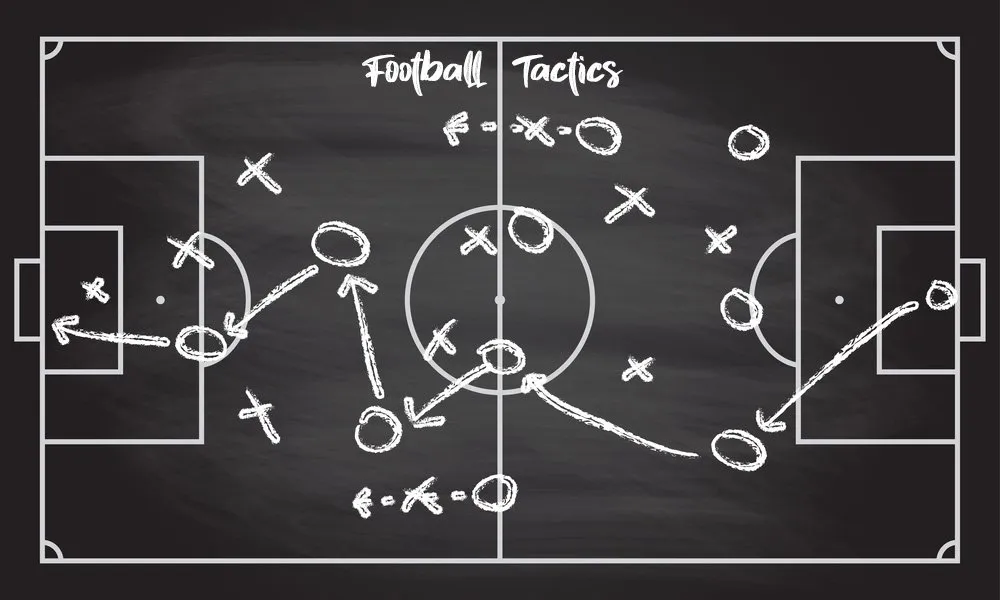
Football tactics have undergone a remarkable transformation since the sport’s early days, evolving from rigid formations to fluid systems that adapt mid-game. This 1,800-word tactical masterclass explores how strategic innovations have shaped modern football and what the future holds for the beautiful game.
Used by early English teams
Single defender, one midfielder, eight attackers
Chaos reigned until offside rule changes
First structured formation (1880s)
Two fullbacks, three halfbacks, five forwards
Dominated for 40+ years
“The Pyramid made football a thinking man’s game” – Football Historian Jonathan Wilson
Created by Herbert Chapman (Arsenal)
Response to 1925 offside rule change
First to balance defense and attack
| Era | Formation | Pioneer | Impact |
|---|---|---|---|
| 1930s | WM | Chapman | Structured defense |
| 1950s | 4-2-4 | Hungary | Total Football precursor |
Positional interchangeability
Johan Cruyff as the “first false nine”
Pressing introduced as a weapon
Rinus Michels’ Philosophy:
“Every player should be comfortable in every position”
Helenio Herrera’s defensive art
Libero position created
Counter-attacking perfected
| Decade | Dominant Formation | Key Team |
|---|---|---|
| 1990s | 4-4-2 | Manchester United |
| 2000s | 4-2-3-1 | Mourinho’s Chelsea |
| 2010s | 4-3-3 | Guardiola’s Barcelona |
| 2020s | 3-2-5 | Arteta’s Arsenal |
Inverted fullbacks
Positional play principles
False nine resurrection
Arsenal’s 3-2-5 in possession
Man City’s 2-3-5 build-up
Liverpool’s 4-3-3 defensive shape
78% of Premier League teams now use fluid formations
Fullbacks complete 28% more passes than 10 years ago
Center backs now make 4.3 progressive carries per game (up from 1.2 in 2014)
The Ball-Playing Keeper (Ederson, Alisson)
Inverted Fullback (Zinchenko, Cancelo)
Box-to-Box Playmaker (Bellingham, Rice)
False Winger (Foden, Griezmann)
“Today’s fullbacks must play like midfielders and defend like center backs” – Trent Alexander-Arnold
Expected Goals (xG) informs shooting positions
Pressing triggers calculated by tracking data
Set-piece routines algorithmically optimized
Brighton’s Moneyball Approach:
Signed Caicedo for £4m using data models
Developed Mac Allister through targeted training
AI-Assisted Real-Time Adjustments
Positionless Football (Total fluidity)
Biometric-Based Substitutions
Holographic Training Simulations
Maintaining football’s spontaneity
Balancing technology with tradition
Preventing tactical homogenization
Study multiple formations
Focus on principles over rigid systems
Develop versatile players
Use simple video analysis
Encourage creative problem-solving
Football tactics continue evolving at breakneck speed, blending art and science in new ways. As Johan Cruyff famously said, “Football is simple, but playing simple football is the hardest thing there is.” The teams that master this balance between structure and creativity will define football’s next era.
Want to master modern tactics?
Learn more at SoccerNewsz.com

Soccer tactics are undergoing their most radical transformation since the invention of Total Football, with 2024 seeing revolutionary…
The Africa Cup of Nations 2024 has evolved into one of the continent’s most lucrative sporting events, with…
Introduction: When Pixels Meet Pitch eSports in Soccer, The line between real and virtual football has never been…


Leave a Reply