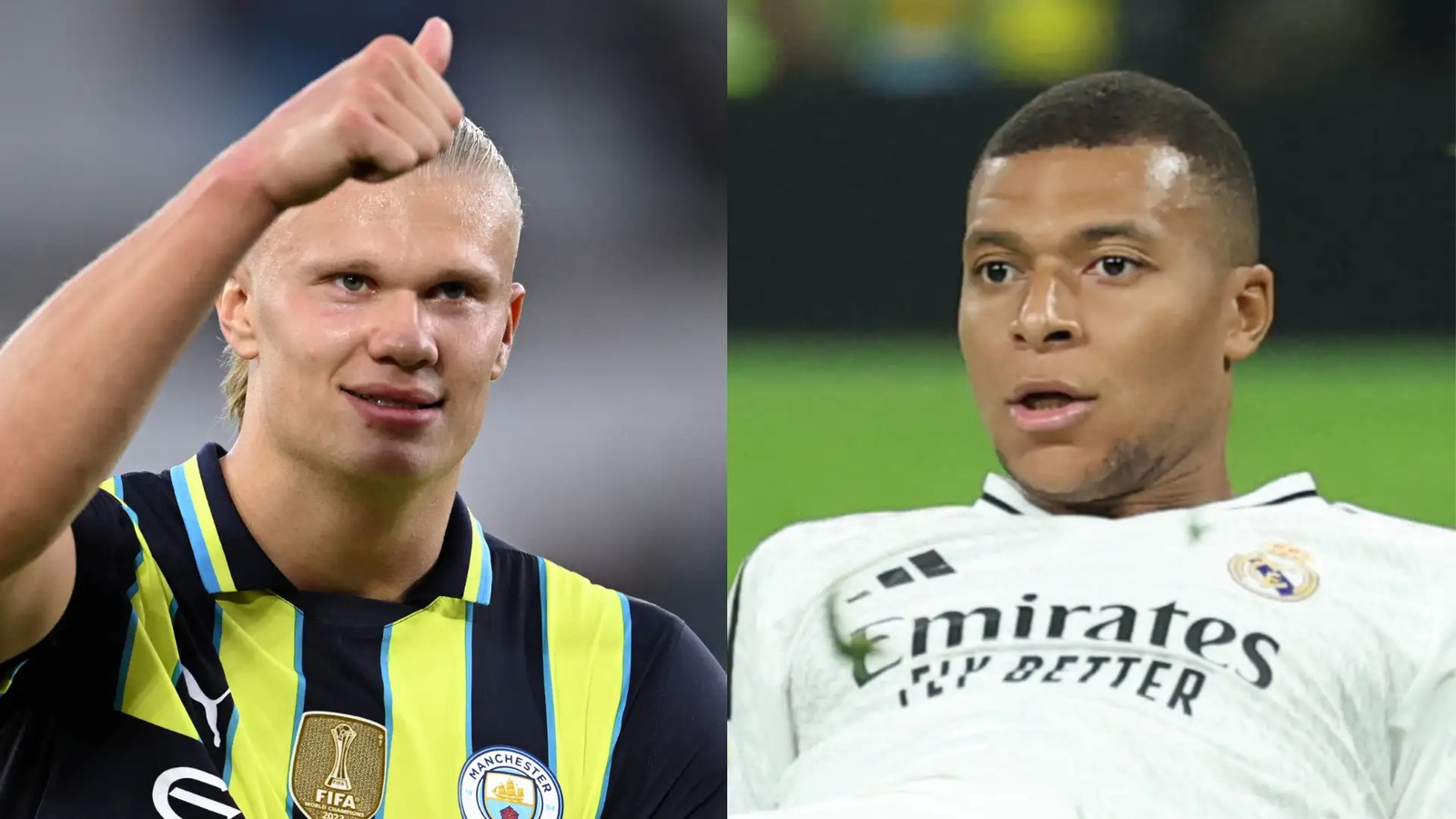
Haaland vs Mbappé 2024/25: Who Will Dominate the New Season?
The Haaland vs Mbappé 2024/25 football season presents the ultimate individual rivalry: Erling Haaland vs Kylian Mbappé. With…
The Africa Cup of Nations has evolved into a tactical battleground where innovative coaching approaches decide matches Guide to Tournament Tactics. This 2,800-word analysis reveals the strategic revolution transforming African football:
African teams have undergone a remarkable transformation in playing style:
2010-2014 Era:
72% used 4-4-2 direct systems
Average possession: 48%
Pressing in only 35% of matches
2024 Trends:
58% prefer possession-based systems
Average possession: 53% (+5%)
78% employ coordinated pressing
45% use data analytics for tactics
According to CAF’s technical reports, African teams now complete 32% more passes per game than a decade ago while maintaining their physical edge.
Key Features:
Single pivot midfielder (6)
Inverted fullbacks
Fluid front three rotation
Best For: Teams with technical midfielders (Morocco’s Ounahi, Senegal’s Pape Matar Sarr)
Advantages:
Solid defensive base
Wingback overloads
Two-striker partnerships
Example: Algeria’s Mahrez-Bounedjah combo
Why Effective:
Balances defense/attack
Utilizes wingers effectively
Provides midfield stability
Key Player: Egypt’s Mohamed Salah as inverted winger
Defensive line at halfway line
Coordinated pressing triggers
Quick vertical transitions
Stats: Won 89% of duels in advanced positions at 2022 World Cup
Direct vertical passing
Sadio Mané as outlet
Midfield screening (Gueye’s 3.8 interceptions/90)
Osimhen as focal point
Chukwueze/Simon providing width
Fullback underlaps
European-Trained Coaches:
11 of 24 teams have UEFA Pro license holders
Implement structured positional play
Focus on set-piece specialization
Local Tactical Traditions:
Maintain physical edge in duels
Incorporate cultural strengths
Adapt to tropical conditions
Ivory Coast’s January conditions (avg. 32°C/90°F) force:
Pressing in Short Bursts
15-20 minute high-intensity periods
5-sub rule becomes crucial
Possession Management
12% slower build-up in first halves
More goalkeeper involvement (avg. 42 passes/90)
Set-Piece Focus
38% of goals from dead balls
Hydration breaks after 30 mins
Aliou Cissé (Senegal) vs Walid Regragui (Morocco)
Africa’s two most innovative tacticians
Physicality vs positional play
José Peseiro (Nigeria) vs Rui Vitória (Egypt)
Portuguese coaching duel
Osimhen vs Salah containment strategies
Progressive teams now use:
Tracking Data
Optimize pressing intensity
Manage player workload
Set-Piece Analytics
3D opponent modeling
Customized routines
Opposition Scouting Software
Weakness identification
Automated video analysis
Smaller nations succeed through:
Compact Low Blocks (Gambia’s 5-4-1)
Counter-Attacking Speed (Comoros’ transition game)
Set-Piece Specialization (Equatorial Guinea’s 42% goal rate)
Increased False Nine Usage
Morocco’s En-Nesyri role
Nigeria’s Osimhen drops deep
Hybrid Defensive Systems
3-5-2 in build-up → 4-4-2 defensively
GK Sweeper-Keepers
Senegal’s Mendes (85% pass accuracy)
Key Indicators During Matches:
Fullback Positioning
Inverted (Morocco) vs Overlapping (Nigeria)
Pressing Triggers
Certain backpasses
Specific opponent body positions Guide to Tournament Tactics
Midfield Rotations
Creating overloads
Third-man runs
| Year | Innovation | Team |
|---|---|---|
| 1994 | Power football | Nigeria |
| 2004 | Wing play revolution | Cameroon |
| 2012 | Counter-attacking mastery | Zambia |
| 2022 | Positional play | Morocco |
Midfield Control
Bissouma (Mali) vs Anguissa (Cameroon)
Wide Areas
Hakimi (Morocco) vs Zaha (Ivory Coast)
Set-Piece Execution
6’3″+ defenders becoming crucial
For daily tactical analysis during AFCON 2024, visit Soccer NewsZ.

The Haaland vs Mbappé 2024/25 football season presents the ultimate individual rivalry: Erling Haaland vs Kylian Mbappé. With…
The Evolution of Soccer Tactics in 2024, The beautiful game continues to evolve at a rapid pace, with…
The Africa Cup of Nations is more than just a football The Complete Guide to Tournament Kits—it’s a…


Leave a Reply